Sagging floor repair in Richmond runs $1,500–$8,000 for most crawl space structural work: replacing rotted sill and girder-end sections and re-supporting spans on proper footings. The early-to-mid-20th-century stock has breathed humid air over vented dirt for eighty-plus years — the repair settles that account.
What eight decades over vented dirt accumulates, where it concentrates, and the fix.
Eighty years of vented dirt, accumulated
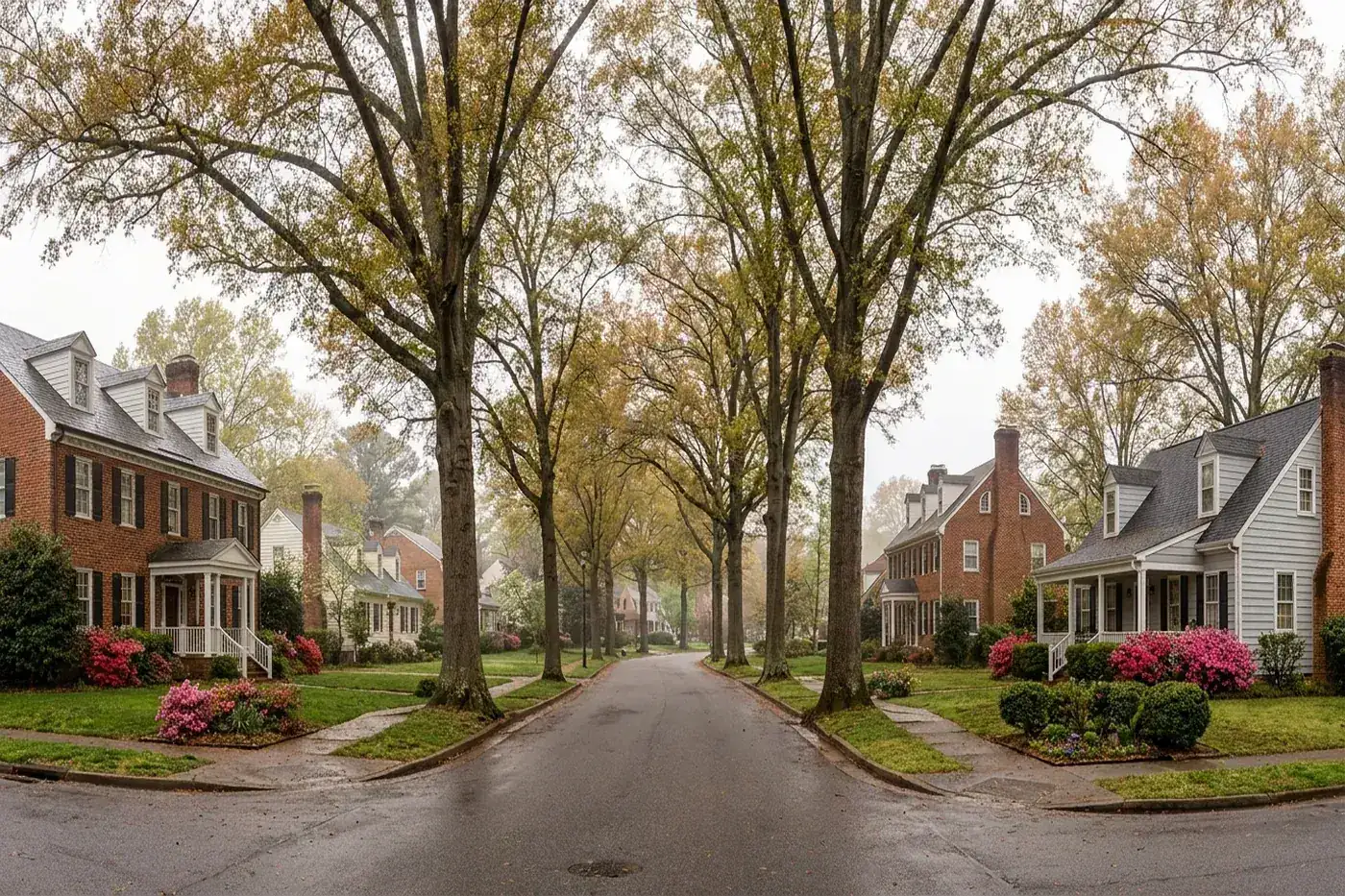
Richmond’s crawl space inventory is the oldest in this fleet: block after block of early-to-mid-20th-century homes built over vented dirt crawls, decades before anyone laid a vapor barrier. The arithmetic has run continuously since — 46–47 inches of rain a year feeding slow-draining Piedmont clay, that clay feeding ground vapor upward, humid summers condensing on cool framing through open vents. Old-growth lumber is why these floors still carry; eighty humid summers is why they carry lower than they used to. The sag in a Northside four-square or a Lakeside cape isn’t a defect arriving — it’s a balance finally coming due.
Where old floors actually fail
| Failure point | Why there | The fix |
|---|---|---|
| Sill beams at the perimeter | Grade-level moisture reaches them first | Section replacement on the affected runs |
| Girder ends in masonry pockets | Damp masonry keeps the end grain wet | End replacement; pocket ventilation or bearing correction |
| Improvised supports | Eighty years of stacked brick and stranded jacks | Engineered supports on proper footings |
| Damp-pocket joist runs | Localized wet zones under baths and low corners | Sister or replace by condition |
| The field of joists | Often sound — old growth earns its reputation | Verified, not assumed — then left alone |
That concentration is good news for the budget: an old Richmond floor rarely needs wholesale replacement. It needs its endpoints rebuilt and its supports made honest — and the scope that names those sections specifically is the one worth signing.
The repair, in the order that holds
Measurement first: the laser survey upstairs maps which spans dropped and how far; the crawl-under reads the history — moisture readings, probing at sills and girder ends, inventory of whatever previous decades left holding things up. Then targeted surgery rather than wholesale replacement: rotted sill and girder-end sections out, spans re-supported on footings sized for this clay, weakened runs sistered, sound old growth left to keep doing what it’s done since Wilson was president.
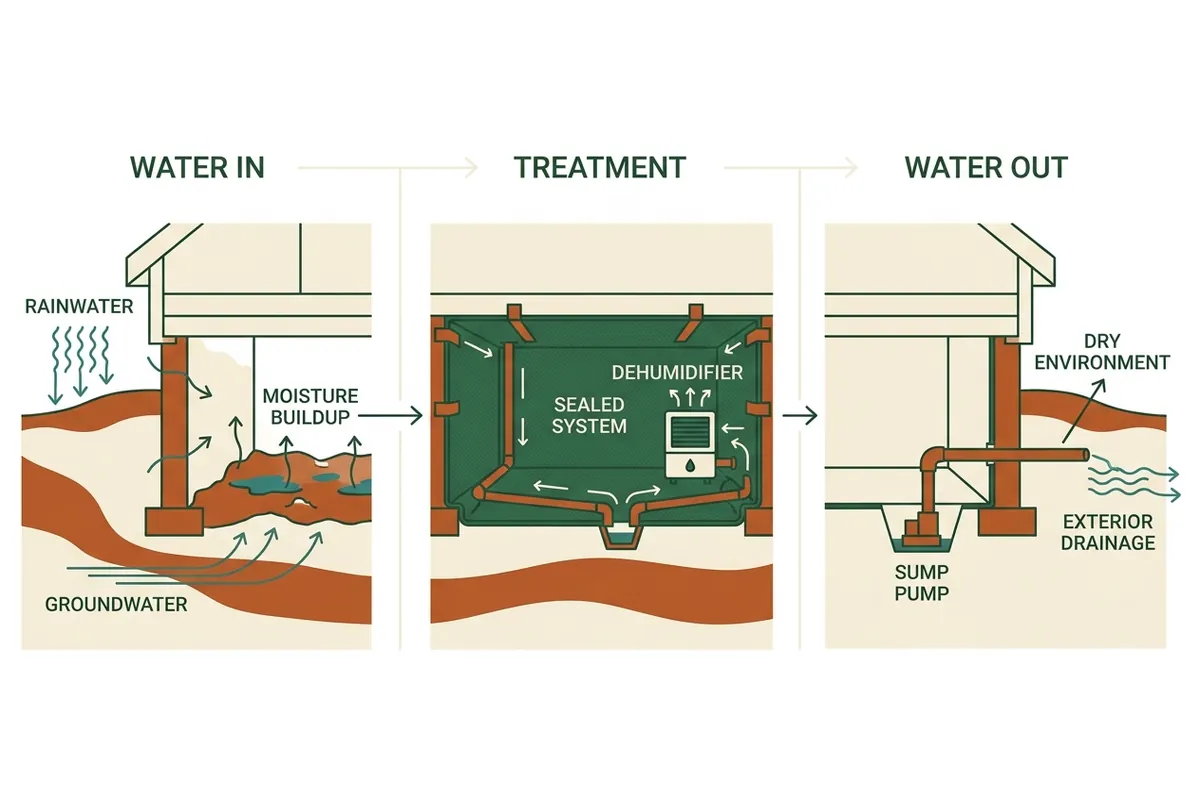
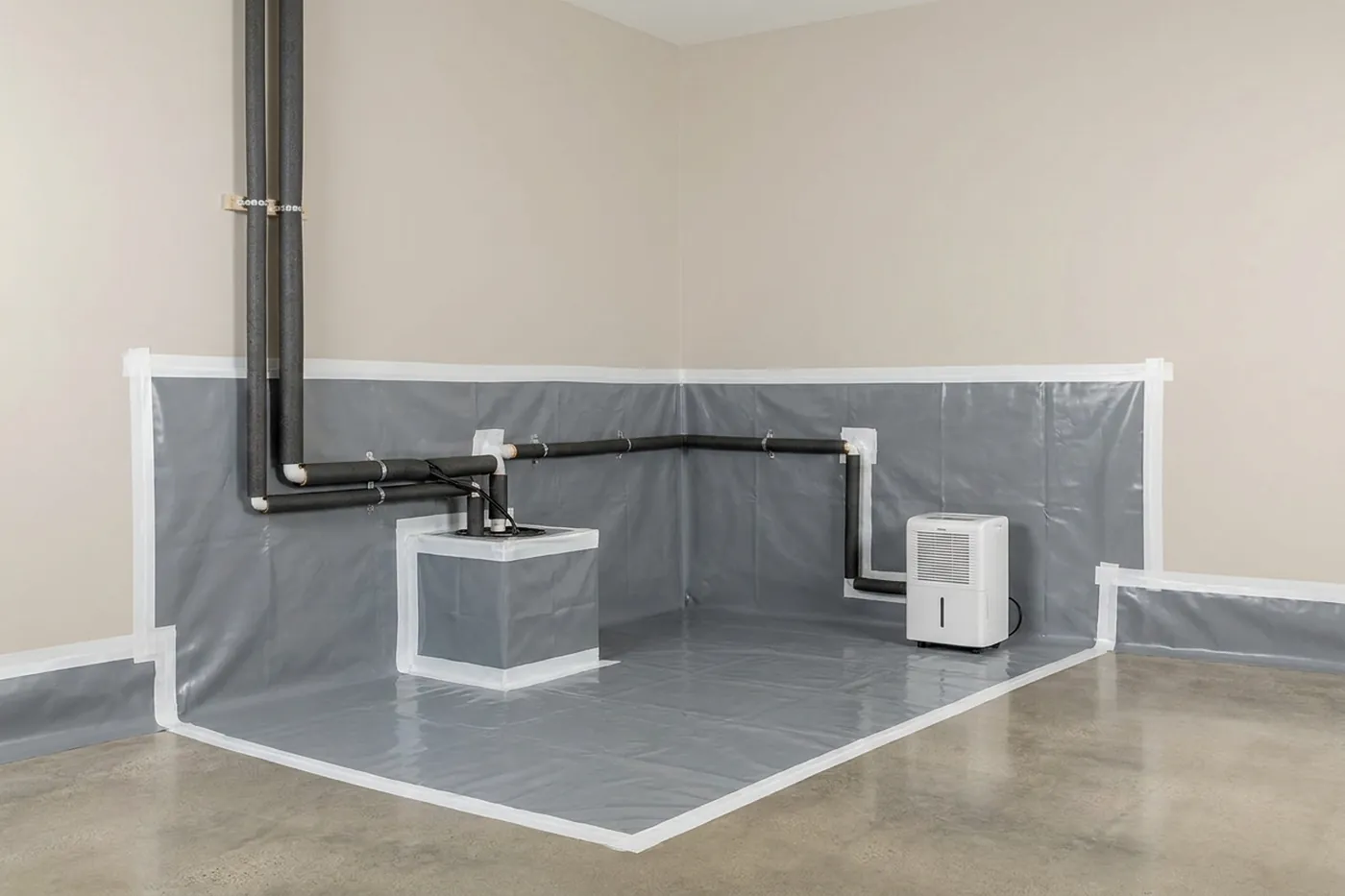
Then the correction the house never had: waterproofing and drainage where water arrives, a sealed vapor barrier over ground that’s been bare for eighty years, moisture control for the air — the sealed-crawl practice Virginia’s code now explicitly permits, and the one upgrade that changes the next eighty years’ arithmetic. Broader context on the crawl space repair page; every price in the cost guide.
What to expect after the repair
A repaired floor is put back within tolerance, not made new — and on a house this old, that distinction is the honest one. Some deflection stays by design, because forcing eighty-year-old framing flat cracks the plaster above it, and the lift is staged slowly for the same reason. Expect a few doors to need adjusting and a hairline crack or two as the frame relaxes; wait a season and patch once. Then change the arithmetic that caused it: the sills and girder ends you just replaced are new wood in an old crawl, and they will age exactly like their predecessors unless the ground below them stays sealed and dry.
Sagging floor questions, straight answers
Why do older Richmond floors sag?
Time multiplied by moisture. The early-to-mid-20th-century stock has stood over vented dirt crawl spaces for eighty-plus years — humid air condensing on framing every summer, Piedmont clay feeding ground vapor upward every season, since before vapor barriers existed. Even good old-growth lumber accumulates that arithmetic: joists ease, girders sag, supports settle.
Isn't old-growth framing supposed to be stronger?
It started stronger, and that's why these houses still stand. Dense old-growth joists carried decades that modern lumber wouldn't have — but eighty humid summers withdraw from any account. What the inspection often finds is excellent wood with localized failures: a rotted sill where a grade problem fed one corner, a girder end gone soft in a damp pocket.
What are the usual failure points under an old Richmond house?
The edges and the improvisations. Sill beams on the foundation perimeter take grade-level moisture first; girder ends resting in masonry pockets stay damp longest; and eighty years of previous owners leave a museum of stacked-brick piers and stranded jacks. The field of joists is often fine — the supports and endpoints are where the story concentrates.
What does the repair actually involve?
Targeted structural surgery, mostly: replacing rotted sill and girder-end sections, re-supporting spans on proper footings instead of the improvised stack, sistering the occasional weakened joist run. Then the moisture correction the house never had — Virginia's code permits sealed crawls now, and an 80-year-old floor system finally getting dry ground is the durable fix.
What does sagging floor repair cost in Richmond?
Most structural crawl space repairs run $1,500-$8,000 — sill and girder-end replacement, support corrections, and access set the number. The moisture work that stops the next eighty years' accumulation prices in the same written scope. The crawl-under inspection with photos is free, and under old houses it's usually a history lesson.
Get a free Richmond crawl space inspection
Tell us what you're noticing — smells, humidity, floor bounce, a wet crawl — and we'll schedule an inspection with photos of what we find. We reply the same business day.