
Crawl space waterproofing in Richmond typically costs $2,500–$7,000 for interior drainage and a sump system. On 46–47 inches of precipitation a year over slow-draining Piedmont clay, storm water that reaches the crawl needs engineered exits. It won't leave on its own.
How water gets in, what an interior system does, and how waterproofing pairs with encapsulation.
Why Richmond crawls take on water
Clay is the villain twice over. It sheds storm water sideways instead of absorbing it (sending sheet flow toward foundations) and where water does soak in, clay holds it against the walls for days. Add settled grading, short downspouts, and the region's serious rain years, and the crawl becomes the lowest dry place water can find. In the eastern metro's flatter, lower neighborhoods, seasonal water tables add pressure from below as well.
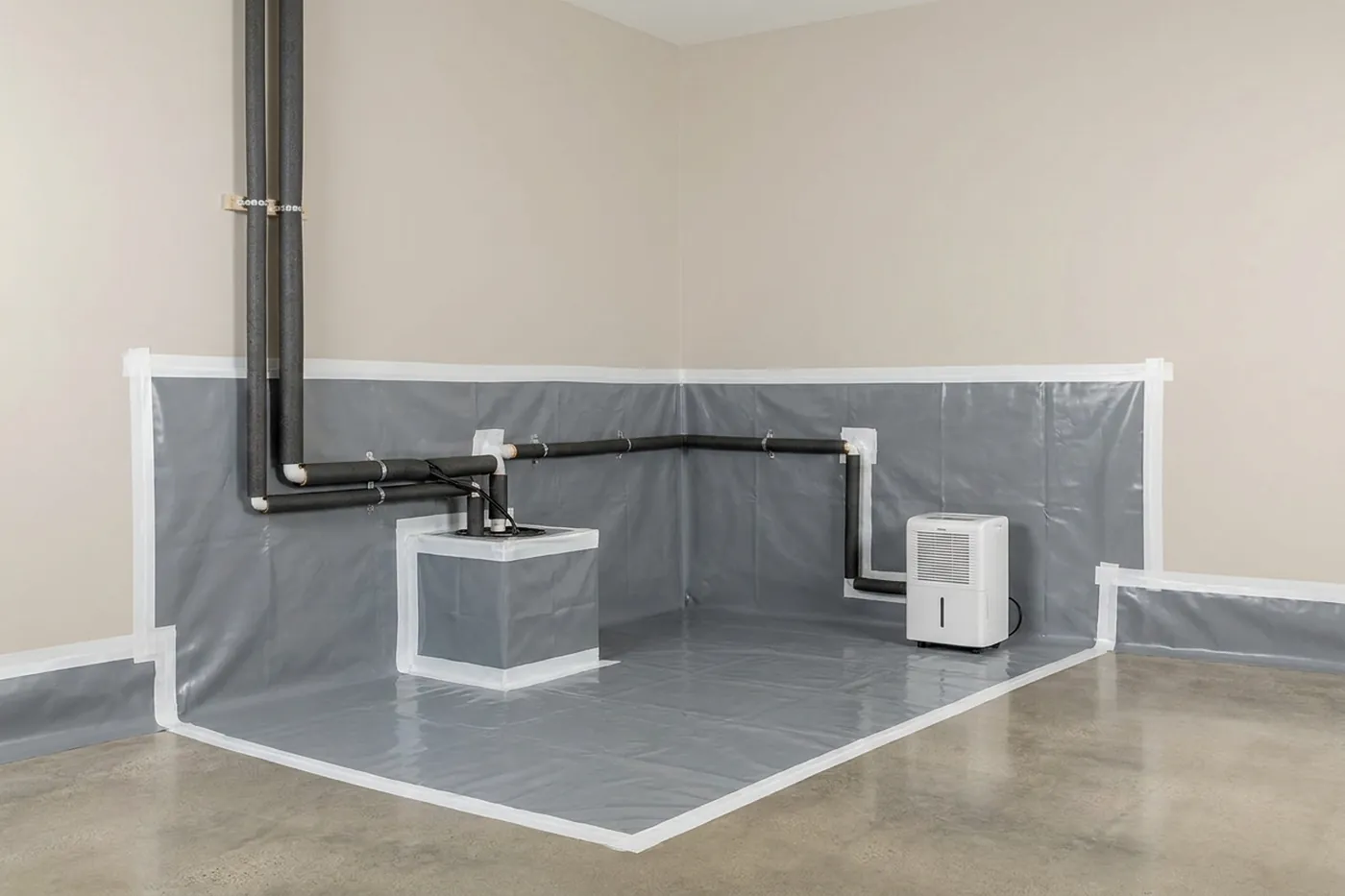
What the interior system does
- Trace the entries: wall seepage, footing-line rise, plumbing, or grading, each with a different answer
- Perimeter collection: a drainage channel at the footing line intercepts water where it enters
- Slope to a sump basin set at the crawl's low point
- Pump it out: a sealed sump with check valve, discharging well away from the foundation
- Back it up: battery backup available, because the biggest storms and power cuts arrive together
Outside, the cheap causes deserve correcting too: downspout extensions and grading tweaks are sometimes half the battle, and a straight specialist will tell you that rather than sell you a system you don't need.
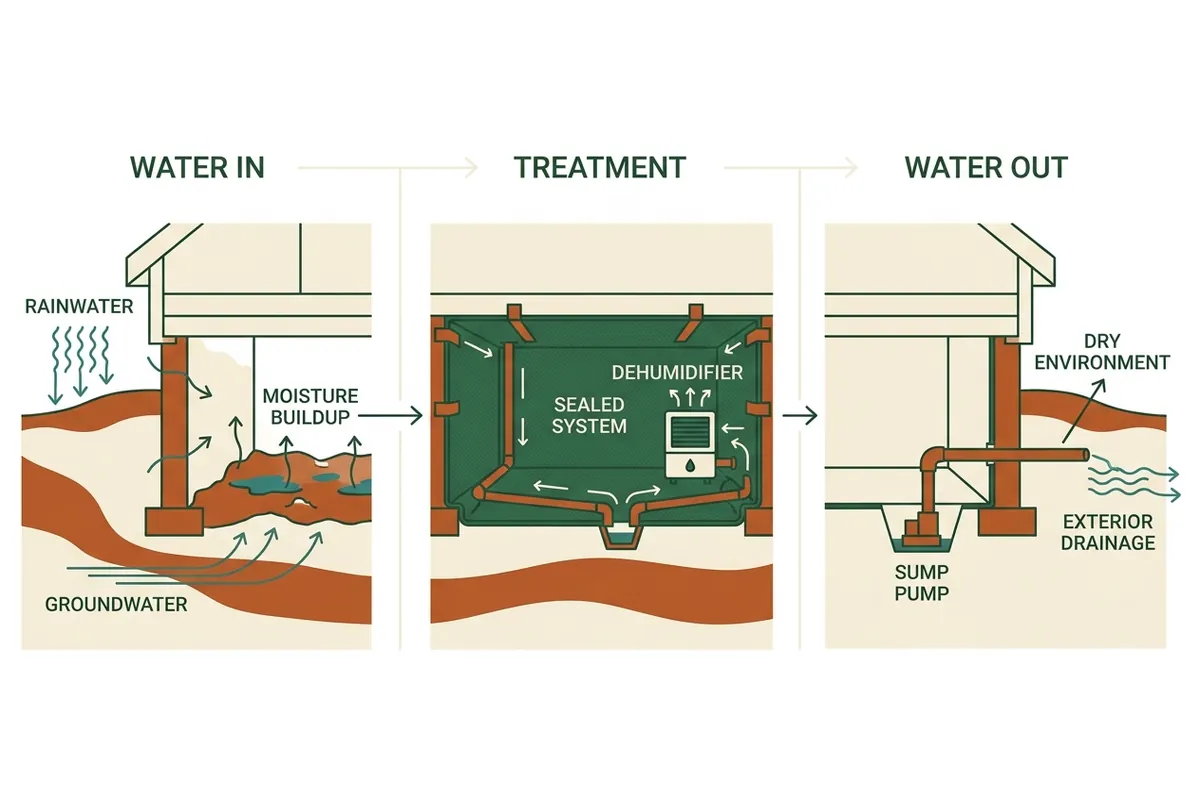
Waterproofing and encapsulation: the right order
Water first, seal second: every time. Drainage makes the crawl dryable; encapsulation keeps it dry. Homes that need both can ask for one combined quote and one crew sequence, which is meaningfully cheaper than two separate projects a year apart.
Waterproofing between the river and the water table
Richmond crawl water arrives on two schedules. Storm water moves fast: city clay sheds toward foundations, downspouts concentrate it, and a crawl can take an inch in an afternoon thunderstorm. Ground water moves slow: parts of the metro sit close enough to the water table that spring saturation seeps for weeks. The design answer differs by schedule: storm-fed crawls get interception first (grading, extensions, surface routing, the cheap decisive lines), while seep-fed crawls need the engineered interior: perimeter channel, sealed sump basin, and discharge routed to daylight with enough fall to keep working in a Virginia downpour.
Most systems land in the published range over one to three days. What to avoid is the big system sold to a downspout problem. A good evaluation maps where the water enters and prices the smallest fix that ends it, in writing, before anything is dug.
Where is the water getting in?
At 46 to 47 inches a year over clay that drains slowly, water tends to arrive and stay. The route it took decides what the fix costs.
| Option | What it does | Most common path in this market |
|---|---|---|
| Surface runoff | Roof and grade water reaching the foundation | Roof and grade water at the wall: the most common and cheapest to correct |
| Through the wall | Hydrostatic pressure pushing through block or joints | Older brick and block foundations take pressure once clay saturates |
| Up through the ground | A water table or spring rising into the crawl | Less common than surface water here, but real on low-lying river-adjacent lots |
| Out of the air | Humid air condensing on cool surfaces, not a leak at all | Muggy June through August condensing on cool crawl surfaces |
In a house with an original dirt crawl, the temptation is to seal first. Water that arrives through the ground will find the seams regardless.
Frequently asked questions
What does crawl space waterproofing cost?
Interior drainage with a sump typically runs $2,500-$7,000 in metro Richmond depending on the crawl's size and how the water enters. Combined with encapsulation, the package usually lands $8,000-$15,000.
Where does the water come from?
Around here: clay soil holding rain against the foundation, grading that slopes toward the house, gutters dumping at the corners, and in low-lying areas a seasonal water table. The inspection traces your specific entry points.
Sump pump or French drain?
Often both, working together: perimeter drainage collects the water, the sump ejects it. A pump without collection misses water at the edges; drains without a pump have nowhere to send it in flat, low crawls.
Does homeowner's insurance cover crawl flooding?
Usually not for groundwater seepage. Most policies exclude it, which surprises people. It's another argument for fixing entry points before the big storm instead of after.
Get a Richmond crawl space inspection
Tell us what you're noticing (smells, humidity, floor bounce, a wet crawl) and we'll pass your request along for an inspection. A local specialist serving Richmond calls you back.