
Crawl space encapsulation in Richmond costs $6,000–$15,000 and takes two to four days. On 46–47 inches of yearly precipitation and muggy summers, a sealed, dried crawl is the fix the Virginia code itself evolved toward: vented crawls here condense moisture all summer long.
How the system works, what each stage does, and where your crawl lands in the price range.
Why sealing beats venting in this climate
Summer air in Richmond routinely carries enough moisture that when it flows through crawl vents and touches cooler joists, ducts, and pipes under your floor, it condenses: the same reason a cold glass sweats on a July porch. The crawl gets wetter because it's vented. Sealing reverses the design: outdoor humidity stays out, ground moisture stays under the liner, and a dehumidifier holds the space at a safe humidity year-round. It's the approach the Virginia Residential Code explicitly authorizes for unvented crawls, and it's how the persistent musty smell finally leaves the house.
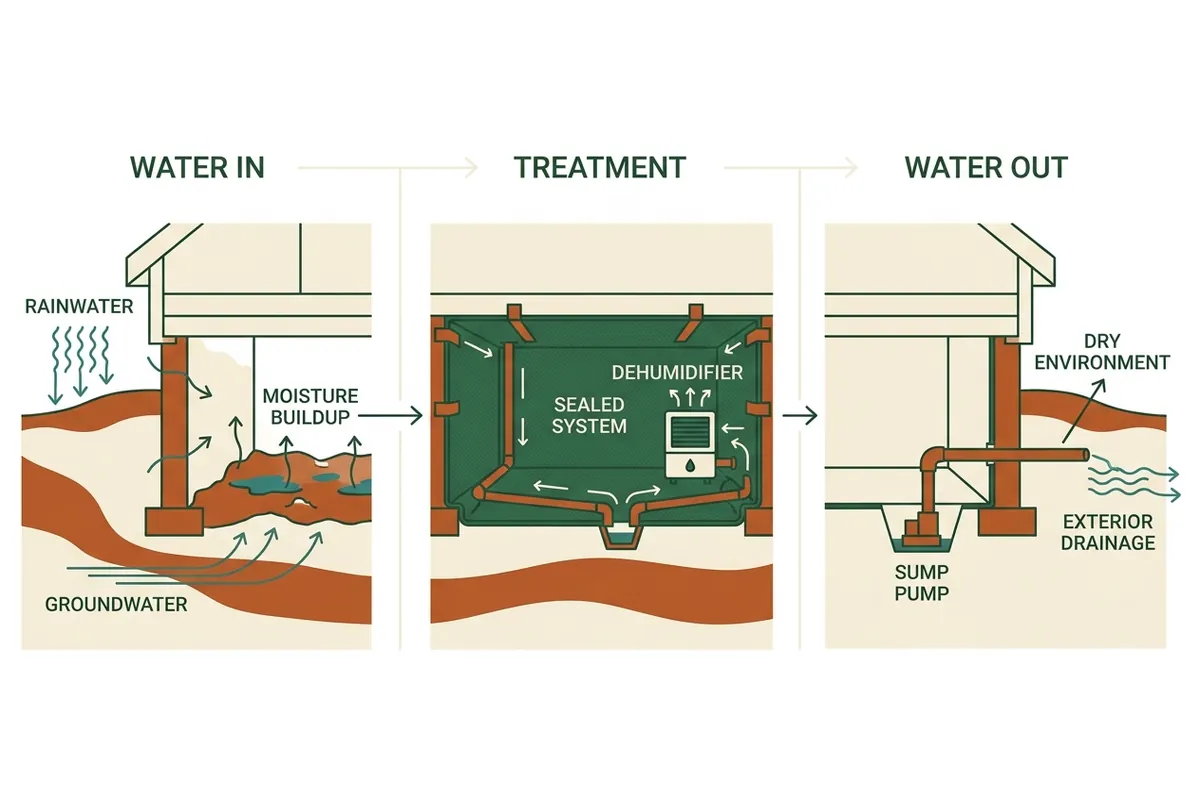
The build, stage by stage
- Inspection with photos: moisture readings, structural check, drainage assessment. Ask whether there is a charge when the specialist calls, and ask to see everything the specialist sees.
- Water management first: interior drain, sump, or grading work if the crawl takes water. Never optional when it's needed.
- Remediation: mold treatment and framing repairs before sealing, so nothing bad gets locked in.
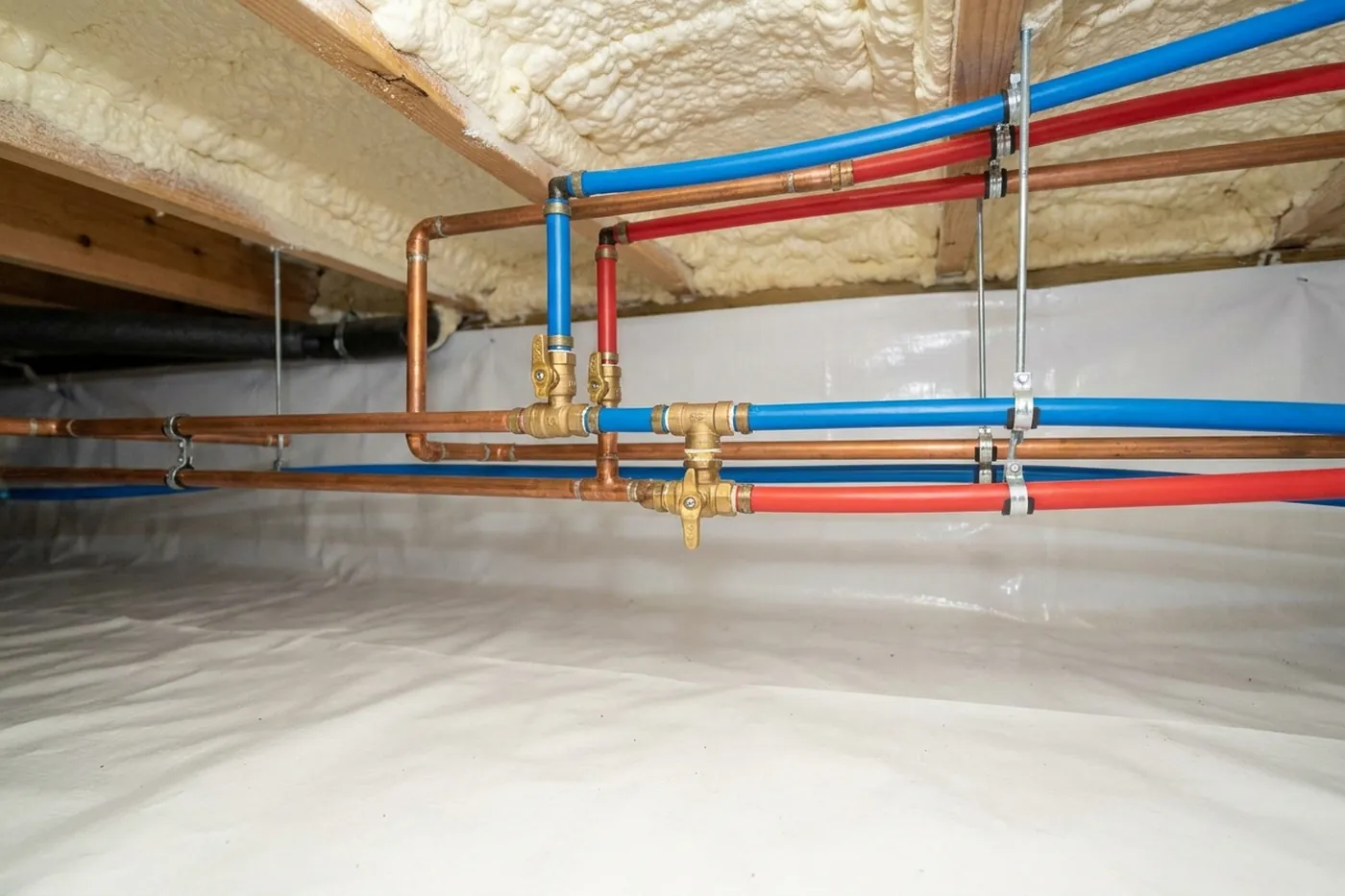
- The seal: reinforced liner across floor and walls, mechanically fastened, taped seams, wrapped piers; vents closed; penetrations air-sealed.
- The dry: crawl-rated dehumidifier, sized to the space, draining automatically.
- Commissioning: humidity verified, photos delivered, maintenance walkthrough done.
What drives the price?
| Factor | Effect |
|---|---|
| Square footage & height | More liner, more labor: the base driver |
| Standing water | Adds drainage/sump stage ($2,000–$5,000 of the range) |
| Mold and rot | Remediation and repairs before sealing |
| Access and obstructions | Tight crawls and duct mazes slow the liner work |
| Dehumidifier size | Sized to cubic feet and moisture load, not one-size |
Ask for a written quote that itemizes every stage, so you can see exactly which factors apply to your crawl, and which don't.
Sealing a crawl on the fall line
Richmond sits where the Piedmont drops to the coastal plain, and its crawl spaces inherit both stories: clay-influenced soils that hold moisture on the high side of town, sandier coastal-plain ground toward the east that moves water fast, and Virginia's long humid season condensing in vented crawls across all of it. Encapsulation here follows the Virginia Residential Code's sealed-crawl provisions (Class I vapor barrier across ground and piers, vents closed, mechanical drying) because the code recognized what the humidity already proved: a vented Richmond crawl spends the summer collecting the outdoors under your floor.
The sequencing rule is fixed: water first (drainage where the lot demands it), framing inspected and repaired second, seal third, dry fourth. Century homes on brick piers get each pier wrapped into the liner; newer construction seals faster. Most full encapsulations here run their published range with the drainage stage as the variable, and the inspection prices your crawl, not the average one.
Frequently asked questions
What's included in the $6,000-$15,000 range?
The full system: cleanup, mold remediation where needed, the reinforced liner sealed at seams and piers, closed vents, air-sealed penetrations, and a properly sized dehumidifier on a drain. Crawls needing drainage or a sump land in the upper half; smaller dry crawls at the bottom.
How long does the finished system last?
Reinforced 12-20 mil liners carry multi-decade lifespans, and sealed vents don't wear out. The dehumidifier is the serviceable part, typically 8-12 years with filter cleanings. Ask whether the installer will inspect their own work on request, so small issues never become resealing jobs.
Can I encapsulate a crawl that floods?
Not until the flooding is solved. That's what drainage and sump work is for, and it comes first in the right sequence. Sealing a liner over standing water builds a swamp in a bag. Fix the water, then seal.
Do I still need my crawl space vents?
No. Closing them is the point. Virginia's residential code permits unvented crawl spaces when a Class I vapor barrier and a drying mechanism are in place, which is exactly what encapsulation installs.
Will this stop the camel crickets?
Largely, yes. They're moisture pests: dry the crawl and seal the gaps they enter through, and the habitat disappears. Same logic applies to the conditions termites and wood-boring beetles favor.
Get a Richmond crawl space inspection
Tell us what you're noticing (smells, humidity, floor bounce, a wet crawl) and we'll pass your request along for an inspection. A local specialist serving Richmond calls you back.